It’s not about what I think, but what we think
For decades, media literacy campaigns have focused on individuals: teaching people to spot fake news, check sources, and think critically. But this, the panelists argued, is no longer enough.
The real shift in psychological defense must move from an individual-centric mindset to one of societal-level resilience. As Magnus Hjort of the Swedish Psychological Defense Agency (Myndigheten för psykologiskt försvar) explained: “It wasn’t until the 2014 war that we (Swedish) were waking up. This was a wake-up call, and we started to discuss and question ‘Don’t we also need to defend ourselves?’”

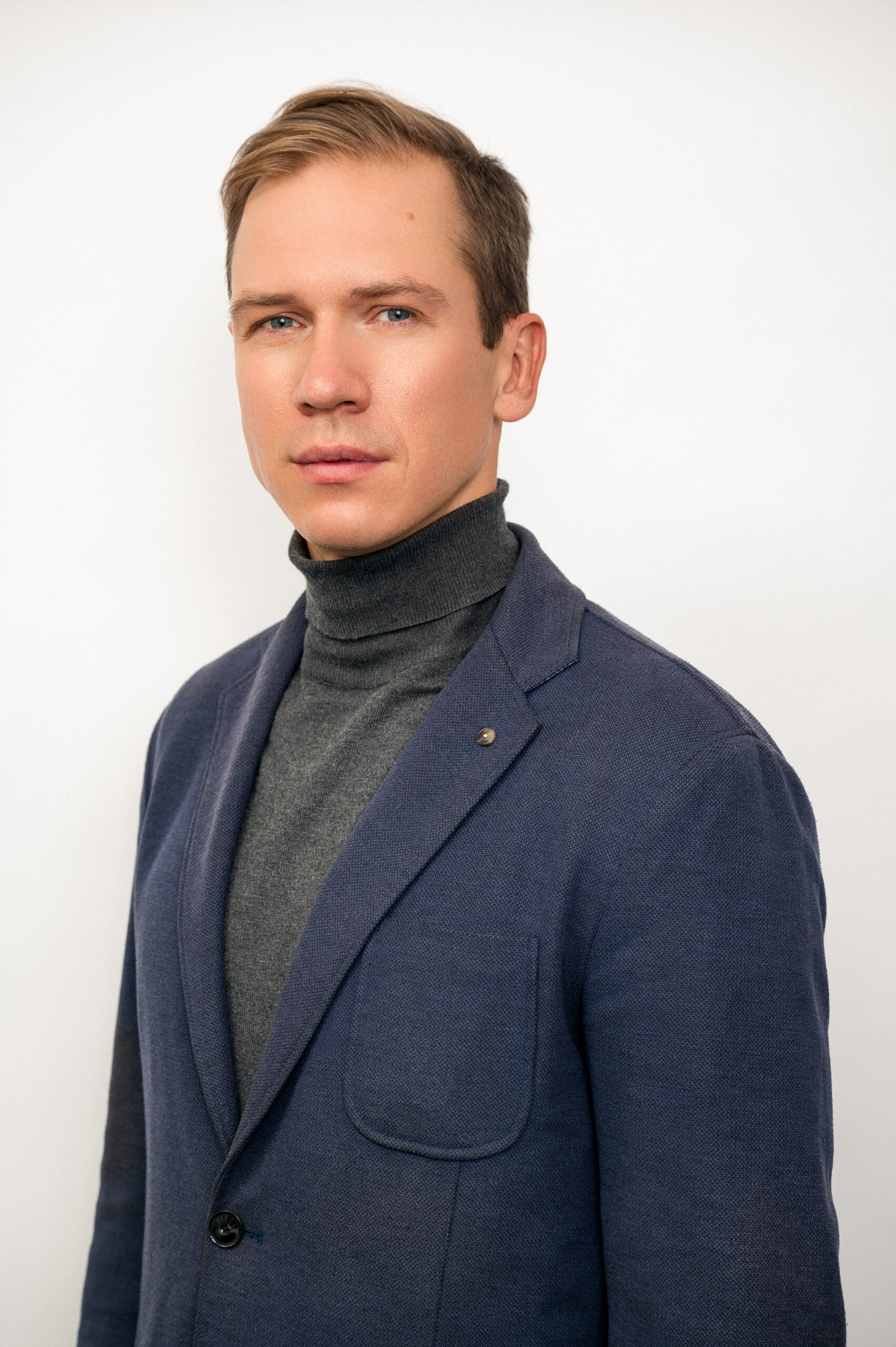
Magnus Hjort/ Photo: A. Safonovas
Today, psychological defense is formally defined as a society’s ability to detect and resist foreign malign information influence, which is the main task of the Swedish Psychological Defence Agency. Hjort made the importance of such agencies clear: “In case of war, we need it to resist all the attempts from foreign adversaries to break down our will to defend ourselves.” In the end, he captured the spirit of this national resolve bluntly: “We will never surrender.”
Dr. Lauri Palsa , post-doctoral researcher from Finland put it bluntly: “Media literacy is too simple a solution for too complex a problem. It puts too much responsibility on the shoulders of citizens.”
Instead, he called for a deeper cultural shift – one that balances skepticism with trust. “If we only focus on risks, we create fear. We should also talk about what we can trust: our institutions, journalism, the way society functions. Media literacy should be about building trust together – families, teachers, communities. This is how we take care of each other.”
Serving a fragmented audience
That collective trust, however, is under strain. Monika Garbačiauskaitė-Budrienė, Director-General of Lithuanian National Radio and Television (LRT), described the challenges facing public media today.
“People have switched from traditional media to social media,” she said. “Audiences are fragmented, and it’s increasingly difficult to serve them while fighting for independence. For us, it’s a constant, constant battle.”

Monika Garbačiauskaitė – Budrienė/ Photo: A. Safonovas
She argued that psychological defense is not only about correcting lies. It is also about offering a trusted alternative – reliable journalism, quality analysis, and even cultural touchstones that bring people together. “Sometimes a basketball game is more uniting than any fact-checking initiative,” she smiled.
Her team has pushed LRT onto TikTok and YouTube, chasing younger viewers where they already are. The goal, she explained, is simple but vital: “accessible, understandable, and reliable information.”
AI and the future of disinformation
If social media fractured the information space, artificial intelligence threatens to shatter it. Hjort warned that fake videos, manipulated voices, and AI-generated propaganda are already here – and improving fast.
“It’s easier, cheaper, and faster than ever to produce fake materials,” he said. “Yes, sometimes you can still spot flaws – a hand with six fingers, an extra leg – but that won’t last long.”
Garbačiauskaitė-Budrienė recalled one chilling example: during a presidential debate, a deepfake video inserted Russian speech into candidates’ mouths. “It spread on YouTube. Sometimes platforms react quickly, but not always. And fighting to remove it takes so much time. It’s painful.”

Dr. Lauri Palsa/ Photo: A. Safonovas
For Dr. Palsa, the danger goes beyond fake content. “AI creates a temptation of ease,” he warned. “But some things – learning, growing up, democratic participation – are meant to be difficult.”
The gold of trust
Despite the threats, the panelists offered hopeful examples. Hjort pointed to Sweden’s swift political unity around NATO membership, where government and opposition united to decide on the application before the general election. By taking this step, Hjort said, they „reduced the things that a foreign adversary can target,” proving that „reducing vulnerability in your own country” is a powerful defense mechanism. This proactive approach, central to agency’s work, is about anticipating threats and reinforcing weak points before they can be exploited, not merely reacting to crises.
But he also issued a sobering reminder: trust is unevenly distributed, even within Sweden. In affluent Stockholm districts, trust in institutions hovers around 80 percent. In marginalized neighborhoods, it drops to 30 percent or lower. Such disparities pose a critical challenge, linking trust directly to education, inclusion, and the sense of belonging in society. “Trust is Nordic gold,” Hjort said. “But it cannot be taken for granted.”
Finland, meanwhile, showcased a longer-term model: decades of cross-government media literacy policies built with libraries, youth groups, NGOs, and the media. The process itself, Dr. Palsa noted, was as important as the policy: “Involving key stakeholders and making them feel valued – is a valuable lesson for all nations.”
Discussion The Invisible Battle: How Can We Equip Society for Psychological Defense was organised on August 30th 2025 in cooperation with the Embassy of Sweden in Vilnius and Embassy of Finland in Lithuania.