Today, that relationship is hard to describe in such terms. Lithuania, Latvia and Estonia are members of both the European Union and NATO, their economies and institutions have moved closer to those of their northern neighbours, and a changing security environment has pushed all eight countries, known together as the NB8, towards closer cooperation.
So, 35 years in, the question is no longer just how closely the two groups work together. It is whether they are gradually becoming one value region.
That question was at the heart of a discussion at the BŪTENT! festival featuring former Lithuanian prime minister Ingrida Šimonytė, former Swedish foreign minister Tobias Billström, Vilnius University political scientist Liutauras Gudžinskas and Ole Andreas Lindeman, director of the Nordic Council of Ministers Office in Lithuania. The discussion was moderated by Linas Kojala, director of the Geopolitics and Security Studies Center.
Ukraine changed the security map
A clear Nordic-Baltic unity today is support for Ukraine.
Šimonytė described it as one of the strongest signs that the eight countries can act as a coherent political bloc. The Baltic states had warned about the Russian threat long before the full-scale war, but 2022 became a turning point for the wider region, bringing national threat perceptions together and accelerating security cooperation.
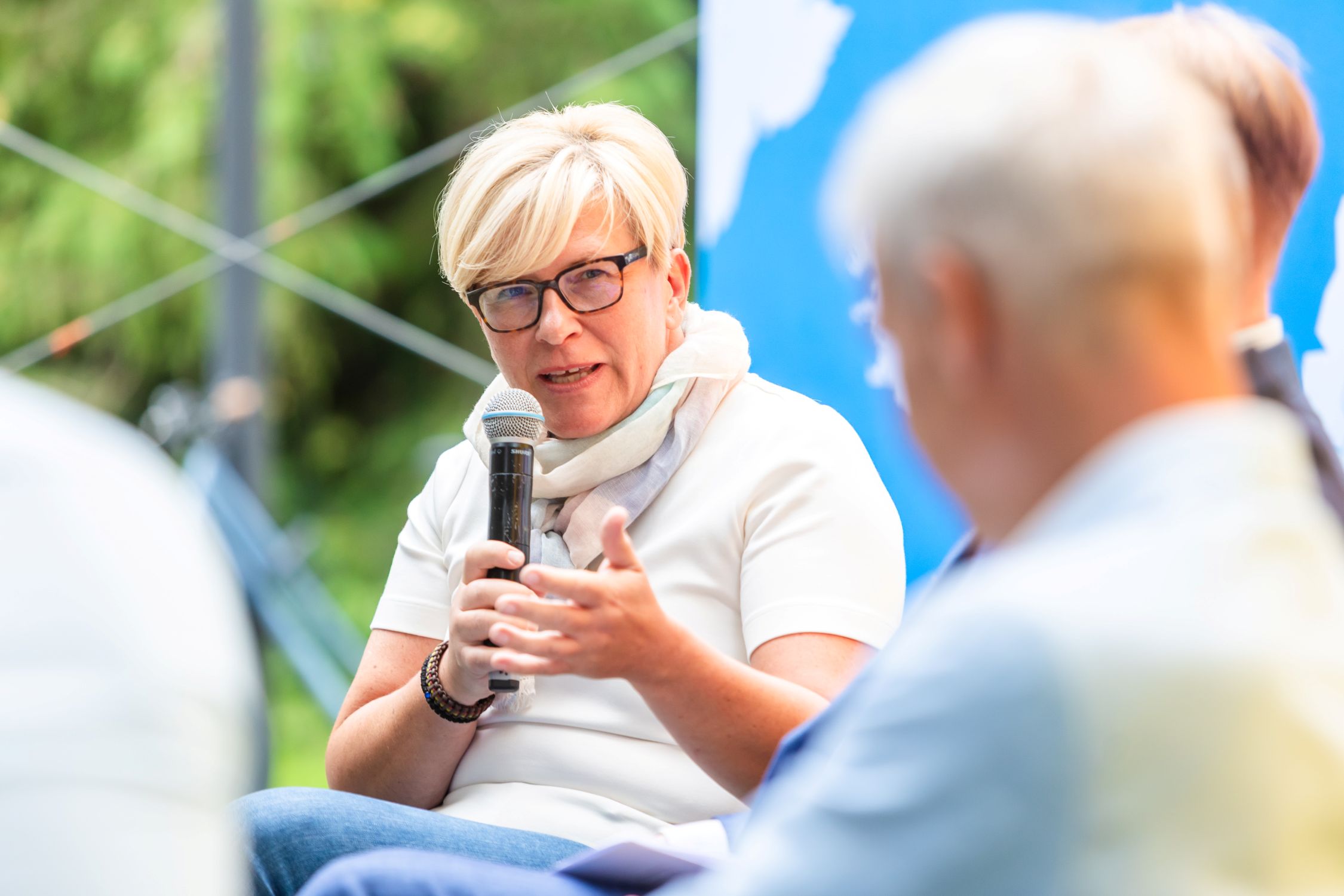
Ingrida Šimonytė
“As this understanding strengthened that this is a joint threat to all of us, to our way of living, to what we want to be in this world, in this continent, I think it’s now so strong, it’s so deeply rooted,” Šimonytė said.
The full-scale war also reshaped the security architecture of the Baltic Sea region. With Finland and Sweden joining NATO, all eight Nordic-Baltic countries found themselves in the same military alliance for the first time.
For Billström, this removed a long-standing barrier. The two groups had already worked together on infrastructure, telecommunications, social affairs and economic issues, but security policy had remained more complicated because of their different military alignments.
“Today all that is history, it is gone and if you can talk about security policy you can talk about everything,” Billström said.
He pointed to the protection of critical infrastructure in the Baltic Sea as one example. NATO structures, regional cooperation formats, coast guards, telecommunications companies and infrastructure owners can now coordinate far more quickly when incidents occur.
Yet geopolitics alone did not create this closeness. Recent crises also revealed how much trust and cooperation had already been built.
The groundwork was laid long before the crisis
Lindeman argued that today’s unity cannot be explained by the crises of 2014 or 2022 alone. The ability to act together rests on something less visible but very solid: decades of institutional links, social ties and accumulated trust.
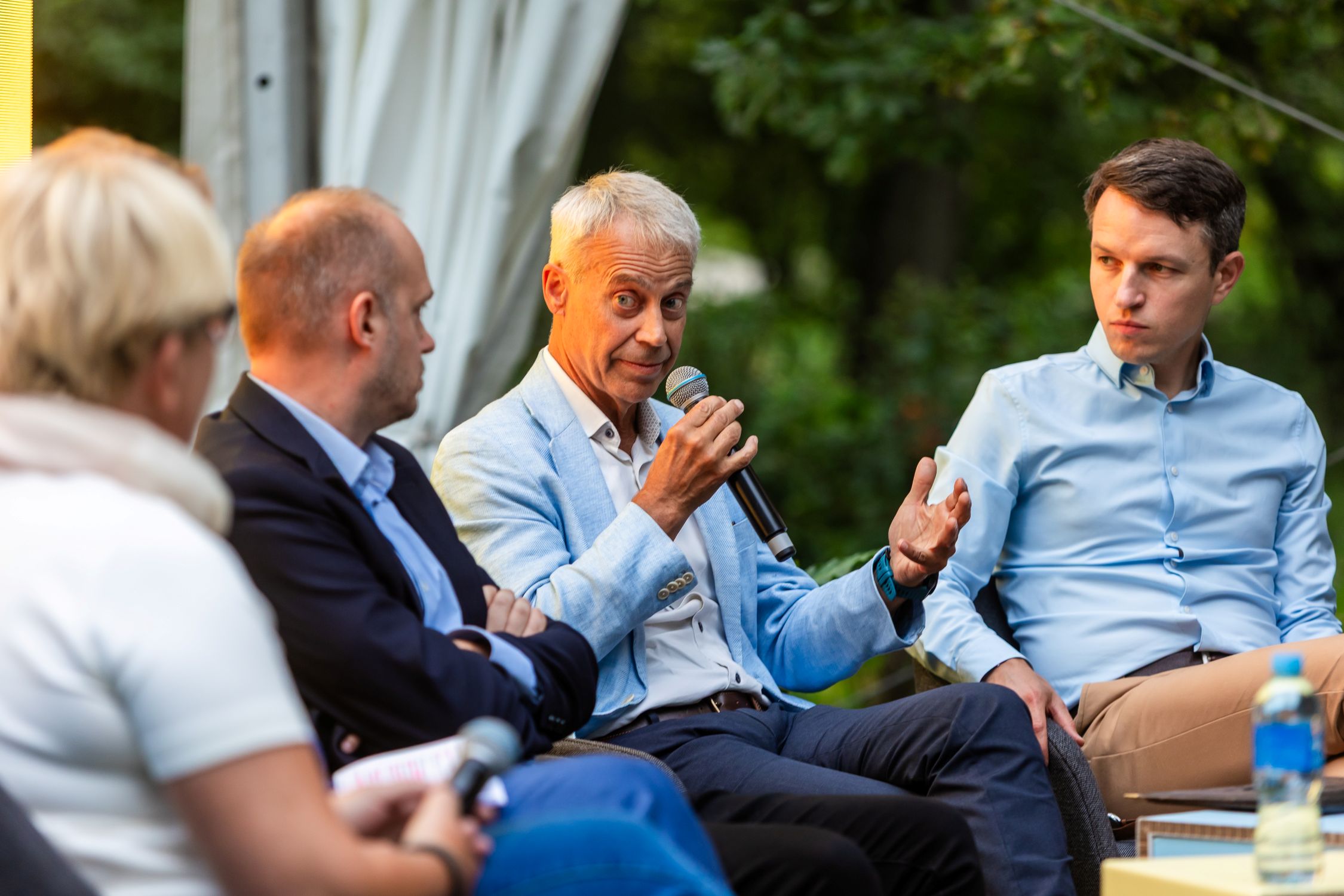
Ole Andreas Lindeman
“We had this sense of having a common destiny,” he said. “That did not come out of the blue in 2014 or 2022. That was because we had something already underneath it. We had trust. We had shared values and common identity.”
After regaining independence, the Baltic states deliberately looked north. The Nordic countries helped build institutions, shared administrative expertise and strongly backed Baltic integration into European structures.
But the relationship is no longer one-directional. Šimonytė said the old hierarchy had largely disappeared.
“Now I think it’s less of this mentor-and-pupil relationship, but it became a good parity because now there are quite many things that we can share with the Nordic countries, same as Nordic countries can share with us.”
That may be the most important result of the past 35 years. The Baltic states are no longer simply recipients of Nordic expertise. Their experience of dealing with Russia, of digitalisation, and of transforming economies and institutions after Soviet occupation has become relevant to the whole region.
Billström pointed to Sweden’s NATO accession as an example.
“There are very few countries who worked so hard for Sweden within NATO to get us on board as quickly as possible,” he said of the Baltic states.
Growing closer through institutions, and through society
Much of the Nordic-Baltic story is told through summits, ministerial meetings and joint statements. Some of the deeper changes are harder to measure.
Gudžinskas drew attention to trust, confidence in state institutions and the control of corruption. Differences between Nordic and Baltic countries remain, but over the past two decades the Baltic states have moved noticeably closer to Nordic standards. He pointed to Transparency International’s Corruption Perceptions Index: all three Baltic states have improved significantly over 20 years, and Estonia now ranks alongside some Nordic countries.
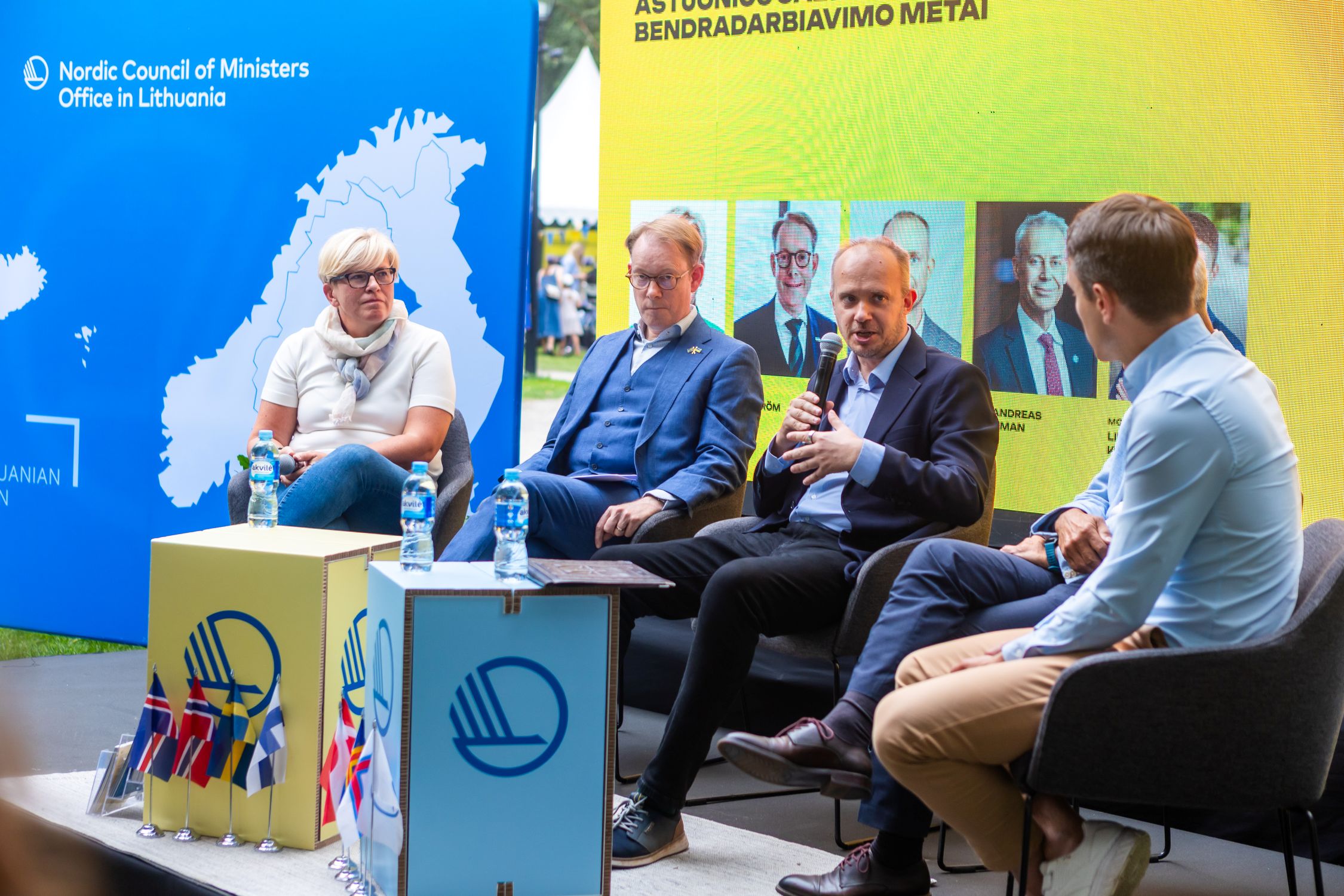
Liutauras Gudžinskas
“If Nordic countries are the most successful countries in the world, Baltic countries are the most successful in this east central Europe at least and I think great contribution is because of the Nordic countries,” Gudžinskas said.
Institutions are only part of the story. Šimonytė also highlighted the dense web of links created by labour markets, business, migration and family ties, everyday connections that rarely appear in political declarations. This combination makes Nordic-Baltic cooperation distinctive, Lindeman argued: it has developed both from the top down and from the bottom up.
Is it time for deeper integration?
There is a paradox at the heart of Nordic-Baltic cooperation: practical cooperation has deepened, but its institutional framework remains relatively informal.
The NB8 has no single common institution comparable to the Nordic Council of Ministers. Several speakers suggested that may eventually change. Billström has supported bringing the Baltic states more closely into Nordic cooperation structures, and Lindeman argued that the logic of regional integration increasingly gravitates towards a Nordic-Baltic Council of Ministers.
Gudžinskas also sees greater formalisation as a possible next step, but warned that cooperation has never progressed in a straight line. Periods of ambition have been followed by slower phases, so today’s momentum cannot be taken for granted.
“A lot of homework has to be done, and progress can always be undermined or reversed. So here, civil society is also very necessary, as are bottom-up forms of cooperation. But there should also be political will, and political will at these critical times is super important,” he said.
Traditional Nordic cooperation and the wider Nordic-Baltic framework are also overlapping more and more, and the boundary between them is becoming less distinct.
Nor can a shared identity be decreed. Billström argued that political leaders cannot simply declare one; if people across the region find value in it, it will develop naturally. Šimonytė was optimistic that the foundations already exist. The Nordic countries are distinct states with different languages, histories and traditions, yet a shared Nordic identity is widely recognised. A broader Nordic-Baltic sense of belonging, she suggested, could develop in much the same way.
It is already being shaped through study, work, cultural exchange, civil society networks and joint projects, connections the Nordic Council of Ministers has helped foster in the Baltic states for more than three decades.
From Europe’s edge to its strategic centre
The growing importance of Nordic-Baltic cooperation also reflects wider changes across Europe. Russia’s war in Ukraine, NATO enlargement, the rising importance of the Arctic and debates over European security and relations with the United States have all increased the strategic weight of Northern and Eastern Europe.
Lindeman argued that the region should increasingly be understood in a wider northern context.
“The political geography of the north is getting tighter,” he said. “The Arctic perspective for the Baltic countries and the Baltic perspective for the Arctic is also getting more and more important for us all.”
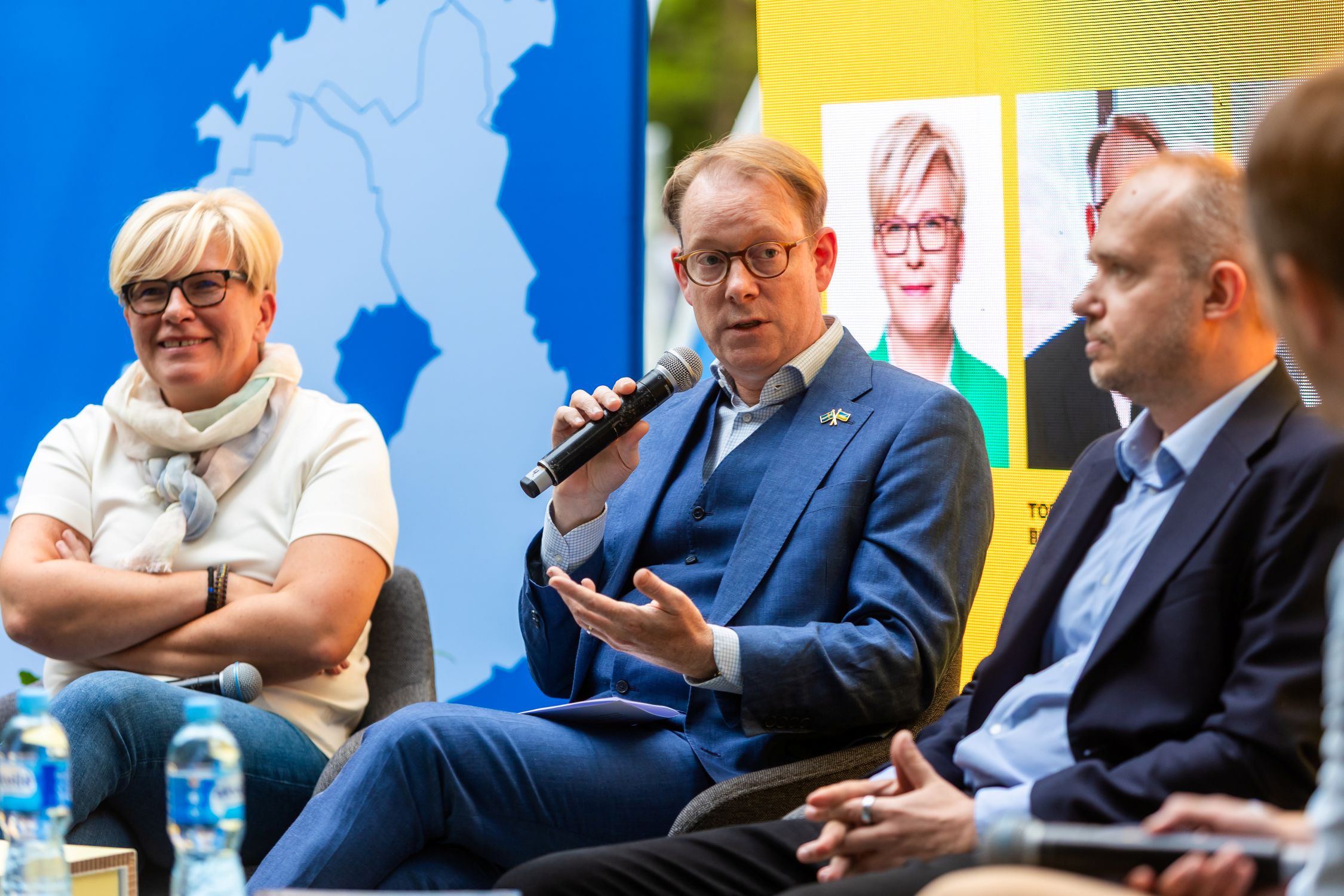
Tobias Billström
Billström argued that the eight countries often underestimate their combined economic and political influence. Acting together, they can carry considerably more weight internationally than they can alone. But that requires more than shared interests. It requires a willingness to think and act in regional terms.
Towards the end of the discussion, Lindeman turned that challenge towards the Baltic states themselves. Lithuania, Latvia and Estonia, he suggested, could do more to approach their Nordic partners not as three individual countries, but as a Baltic bloc.
The coming years may offer a chance to test that. Lithuania holds the presidency of the Council of the European Union in the second half of 2027, while Norway will lead several Nordic formats. Together, these could bring the agendas of the two parts of the region closer.
Perhaps, though, the most important change has already happened. Thirty-five years ago, the question was whether the Baltic states could move closer to Northern Europe. Today, the question is increasingly not whether they belong to the same political region, but what form it should take, and what still needs to happen as those ties continue to grow stronger.